If you’re running a business in Northern Virginia and you keep hearing “Switch to an S-Corp, you’ll save a ton,” you’re not alone. This is one of the most common money questions we get at TriLedger, especially from owners in Fairfax, Arlington, Loudoun, Alexandria, Falls Church, McLean, Reston, and Prince William.
Here’s the truth: an S-Corp can save you real money, but only when the numbers, payroll, and compliance actually make sense. Otherwise, it’s just extra paperwork, extra fees, and extra ways to accidentally mess up your taxes.
This guide breaks S-Corp vs LLC in Northern Virginia it down in plain English with the exact local lens you need for Northern Virginia. No fluffy “it depends” and no generic national advice that ignores how business actually works here.
Call 571-999-7210 or email info@triledger.com to book a consultation today.
Quick answer: what usually saves more in Northern Virginia?
Most of the time:
- LLC taxed as a sole proprietor or partnership is the simplest and cheapest to run, especially in year one or if profits are modest.
- S-Corp tax status can reduce self-employment taxes when you have consistent profits beyond a reasonable salary, and you’re ready to run payroll correctly.
Key detail: An S-Corp is not a business type by itself. It’s a corporation (or an LLC) that elects S-Corp tax treatment with the IRS.
The real difference that impacts your wallet: how owners are taxed
LLC (most common setup)
Depending on how your LLC is taxed:
- Single-member LLC usually reports business profit on your personal return (Schedule C).
- Multi-member LLC usually files a partnership return and issues K-1s.
In both cases, your profit is generally subject to self-employment tax (plus income tax). That’s why owners feel the sting.
S-Corp (the “salary + distribution” setup)
An S-Corp owner typically gets paid in two buckets:
- W-2 salary (runs through payroll, with payroll taxes)
- Owner distributions (not subject to self-employment tax in the same way)
This is where savings can happen. But there’s a rule that ruins a lot of “TikTok tax strategies”:
S-Corp shareholder-employees must be paid reasonable compensation for work performed before taking large distributions. IRS+1
So no, you can’t pay yourself $10,000 salary and take $190,000 distributions if you’re the one doing the work. That’s the kind of thing that gets audited, reclassified, and penalized.
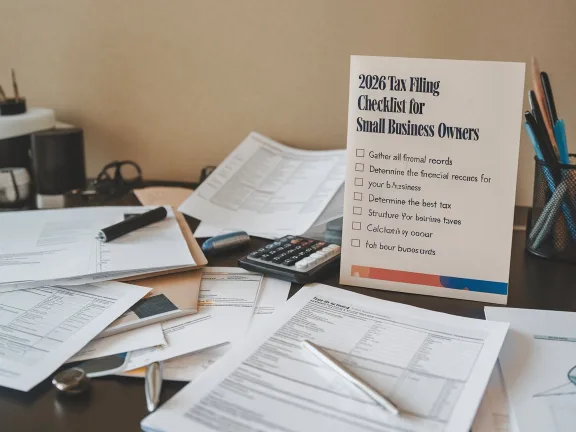
Also Read: Your Complete 2026 Tax Filing Checklist for Small Business Owners in Northern Virginia
The Northern Virginia “profit threshold” reality check
Here’s a simple way TriLedger looks at it for Fairfax, Arlington, and Loudoun business owners:
An S-Corp tends to be worth it when:
- You have steady, repeatable profit
- You’re ready to run payroll every month (or at least regularly)
- You can justify a reasonable salary and still have meaningful profit left after that
- You want cleaner tax planning (retirement contributions, wage strategy, predictable estimates)
An S-Corp is often NOT worth it (yet) when:
- Your profit is inconsistent (seasonal, unstable, still ramping)
- You’re mixing personal and business spending
- Your bookkeeping is messy (no shade, just reality)
- You don’t want payroll, compliance deadlines, or extra filings
What your competitors didn’t explain clearly (and how you beat them locally)
Most “S-Corp vs LLC” articles rank because they’re broad and keyword-stuffed. But they miss what Northern Virginia owners care about:
- Real-world, service-business scenarios (consultants, contractors, agencies, clinics, law firms)
- Local compliance stack (county licenses, BPOL exposure, sales tax realities, payroll compliance)
- Decision framework you can actually use
- 2026-forward planning with clean bookkeeping and proactive tax planning
That’s exactly how TriLedger can outrank national content: we don’t write for “anyone.” We write for Fairfax + Northern VA owners who want the right structure and want it handled correctly.
S-Corp vs LLC: side-by-side comparison that actually matters
1) Taxes (the big one)
LLC (default tax treatment):
- Simpler
- Profit often exposed to self-employment tax
- Great when you’re building consistency
S-Corp:
- Potential self-employment tax savings via salary vs distributions
- Requires payroll, officer compensation planning, and documentation
2) Payroll and compliance workload
LLC:
- No requirement to run payroll for yourself (owners usually take draws)
- Fewer filings
S-Corp:
- Payroll setup, filings, W-2s, quarterly reports
- Reasonable comp documentation matters
3) Bookkeeping needs
LLC:
- You can survive on “good enough” books (but you’ll still overpay taxes if books are sloppy)
S-Corp:
- Needs clean monthly bookkeeping
- Stronger separation of salary, distributions, reimbursements, and expenses
4) Flexibility
LLC:
- Very flexible ownership and profit allocation
S-Corp:
- More restrictions (ownership rules, one class of stock conceptually)
Northern Virginia scenarios: which one fits you?
Scenario A: Solo service business (consultant, marketing, IT, coach)
If you’re in McLean, Reston, or Arlington running a one-person service business:
- Start as LLC
- Focus on clean books, clean separation, predictable profit
- Consider S-Corp election when profit stabilizes and you can run payroll without chaos
Scenario B: Contractor or construction business (Fairfax, Loudoun, Prince William)
If you’re paying subs, buying materials, and cash flow swings month to month:
- LLC often wins early because it’s simpler
- S-Corp can win later when margins are steady and payroll is clean
- The real unlock is job costing + tight bookkeeping + smart tax planning
Scenario C: Multi-owner business (partners, agencies, clinics)
If ownership is shared:
- LLC is often the cleanest operationally
- S-Corp can still work, but the structure must match how owners actually work and get paid
This is where “generic internet advice” breaks fast. Two owners doing different roles and different hours? The comp plan has to make sense.
The hidden landmines that cost people money
Mistake 1: “I’ll do S-Corp to save taxes” but no payroll
That’s not a strategy, that’s an audit invitation. Reasonable compensation is not optional.
Mistake 2: Taking distributions without clean bookkeeping
If your books aren’t reconciled monthly, you don’t actually know what profit is. And if you don’t know profit, your tax strategy is basically vibes.
Mistake 3: Ignoring local obligations
Northern Virginia businesses often face county and local requirements (registrations, business license rules, and potentially BPOL depending on locality and activity). If you want to rank locally, your page should address these realities and show you help owners stay compliant.
Mistake 4: Thinking an S-Corp fixes bad spending habits
An S-Corp doesn’t make your business healthy. It just changes how you report and pay.
TriLedger’s “no-regret” decision checklist (use this before you switch)
If you can check most of these, S-Corp status may be a win:
- I have consistent profits, not just revenue
- I can run payroll on time, every time
- I’m ready for more compliance and more structure
- I can justify a market-based salary for my role
- My bookkeeping is clean monthly (reconciled, categorized, documented)
- I want proactive tax planning, not panic filing in March
If you can’t check these yet, your best move is usually:
Stay LLC, get your bookkeeping tight, clean up your tax strategy, then switch when the math is undeniable.
That approach saves you money twice: once in taxes, and again by avoiding the “switch too early and regret it” trap.
How TriLedger helps Northern Virginia owners choose correctly (and stay clean)
TriLedger supports business owners across Fairfax, Arlington, Loudoun, Alexandria, Falls Church, McLean, Reston, and Prince William with:
- Bookkeeping cleanup and monthly bookkeeping
- Tax preparation and year-round tax planning
- Entity structure guidance (LLC vs S-Corp vs “not yet”)
- Payroll setup and ongoing payroll support
- Sales tax filings support (when applicable)
- Consulting around profitability, pricing, and cash flow
And we do it the way it should be done: numbers first, compliance second, savings third. Not the other way around.

FAQs: S-Corp vs LLC in Northern Virginia (2026)
Is an S-Corp better than an LLC for taxes in 2026?
Sometimes. The S-Corp can reduce self-employment tax exposure when profits are consistently high enough after paying a reasonable salary. But it adds payroll and compliance obligations, so it has to be a net win.
Can my LLC become an S-Corp?
Yes. Many businesses keep the LLC legal structure and elect S-Corp tax treatment with the IRS.
Will an S-Corp lower my taxes automatically?
No. If your profit is low or inconsistent, the extra admin and payroll costs can cancel out the savings.
What does “reasonable salary” mean?
It means your pay should make sense for the work you do in the business. The IRS expects shareholder-employees providing services to receive reasonable compensation.
Does Northern Virginia change the S-Corp vs LLC decision?
It can. Local compliance realities, licensing, and how your business operates in Fairfax, Arlington, Loudoun, and surrounding areas can affect the “real cost” of complexity. That’s why local-first planning beats generic national advice. See us on Instagram & LinkedIn.